
Most property owners underestimate how much work happens before a single float hits the water. A floating dock built from aluminum is not a weekend project or a kit you assemble in an afternoon. The process runs from site survey through permitting, fabrication, and final commissioning, and each phase has real consequences for what you end up with. Skipping or rushing any step produces a dock that shifts badly at the gangway, corrodes at the connection points, or fails a county inspection after the fact. Here is exactly what the process looks like, in order.
Site Assessment and Load Planning Come First
Before any design work begins, a qualified contractor measures the water depth at low tide, checks the bottom substrate, records tidal swing, and notes any wave exposure or boat wake patterns. These numbers drive every structural decision that follows. A site with a two-foot tidal range needs a different gangway pitch and float freeboard than one with a six-inch range.
Load planning is equally specific. You need to know the heaviest boat that will ever be on the dock, how many people will use it at once, and whether you are adding accessories like a kayak launch, cleats, or a fuel station. Aluminum extrusions are rated by section modulus, and the frame members chosen for a 20-foot recreational dock are different from those specified for a 60-foot commercial slip. J&M Marine Construction consistently points out that homeowners who skip this step end up with a dock that bounces or racks under load, which is both annoying and a liability.
Permitting in Southwest Florida Takes Real Time
Collier County and the Florida DEP both have jurisdiction over in-water structures. Depending on your property’s location and the dock’s footprint, you may also need a U.S. Army Corps of Engineers permit. In practice, a standard residential floating dock in Naples, FL typically requires a Collier County building permit and a DEP exemption or individual permit, and the review timeline runs anywhere from six weeks to six months depending on scope and whether the site is near seagrass or manatee protection zones.
Your contractor should pull all permits. Do not accept an arrangement where you are responsible for filing. A contractor who knows the local agencies, who has submitted dozens of packages to the same reviewers, will catch problems in the application before they trigger a request for additional information, which can add months. Vivid Shores and other waterfront communities in the Naples area fall under the same county jurisdiction, so the process is consistent, but site-specific conditions like mangrove proximity can change the permit category entirely.
One practical note: get the permit number in writing before any materials are ordered. Fabrication should not begin on a custom float system until approval is confirmed.
Fabrication and the Specifics of Aluminum Construction
Marine-grade aluminum for floating docks is almost always 6061-T6 or 6005A-T5 alloy. Both resist saltwater corrosion far better than standard structural aluminum. The float pontoons themselves are typically high-density polyethylene (HDPE) or expanded polystyrene encased in a shell, not aluminum, because aluminum does not float. The aluminum structure sits on top of and around those floats, forming the deck frame, the cleating rails, and the connection hardware.
Fabrication happens in a shop, not on-site. A reputable builder will weld or mechanically fasten the frame sections, apply any protective coatings to connection hardware, and pre-drill for decking before transport. Decking choices include aluminum grating, composite boards, or tropical hardwood. Each has a different slip resistance, heat absorption, and maintenance requirement. Aluminum grating is the coolest underfoot in direct sun. Composite runs hotter but looks more residential. The choice matters more in Naples, FL than in a northern climate because deck surface temperatures in direct July sun can exceed 140 degrees on the wrong material.
For clients along the Naples waterfront or on canals in Marco IslandJ&M Marine Construction typically recommends composite decking over aluminum grating for residential applications, specifically because barefoot use is common and the grating pattern is hard on feet at those temperatures.
Installation, Anchoring, and Final Inspection
Installation day is when the floating sections, gangway, and anchor system all come together. The anchor system is where most cost surprises happen. Spud poles, guide pile systems, and anchor chains each suit different bottom conditions and wave environments. A protected canal with a soft mud bottom takes a different anchor approach than an open bay with sandy substrate and two-foot chop.
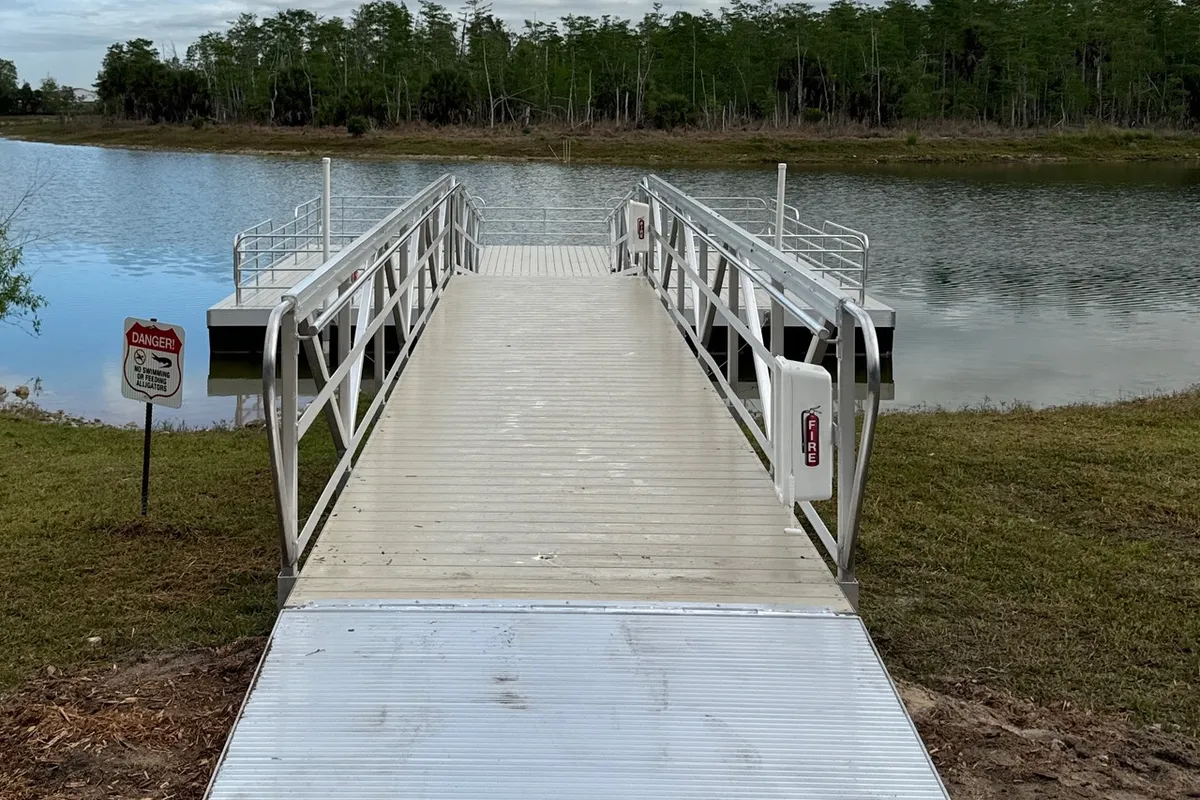
The gangway connects the fixed dock or seawall to the floating section. It must be long enough to maintain a walkable slope at both high and low tide. A gangway that is too short creates a steep ramp at low water, which is a fall hazard and a code issue. Minimum slope ratios are specified in the permit drawings, and the inspector will check them.
Final inspection covers structural connections, gangway slope, electrical if any lighting or power was added, and compliance with the approved permit drawings. Any deviation from the approved plans, even a minor one, must be documented and sometimes re-reviewed. After the inspection sign-off, the contractor should walk you through the dock, demonstrate any adjustable components, and explain the maintenance schedule. Aluminum floats need periodic inspection of connection hardware for galvanic corrosion, especially where aluminum meets stainless steel fasteners in saltwater. That interface is the most common failure point over time.
J&M Marine Construction operates out of Naples, FL and has direct experience with the permit offices, water conditions, and site variables that shape this process across Southwest Florida. For questions or project planning, they can be reached at 2496 Kirkwood Ave, Naples, FL 34112, or by phone at (239) 353-7326.
Frequently Asked Questions
What should I prepare for before starting the dock construction process?
You should conduct a thorough site assessment which includes measuring water depth at low tide, checking the substrate, and noting tidal swings and wave patterns. This information is crucial for the structural decisions that will follow and ensures that the dock is built to withstand local conditions.
How long does the permitting process typically take?
The permitting process in Southwest Florida can take anywhere from six weeks to six months, depending on factors like the dock’s footprint and proximity to protected areas like seagrass or manatee zones. It’s essential to have your contractor handle all permits to avoid delays and ensure compliance with local regulations.
What are common mistakes to avoid during dock construction?
A common mistake is skipping the site assessment and load planning, which can lead to a dock that bounces or racks under load. Additionally, not getting the permit number in writing before ordering materials can cause significant delays if issues arise during the application process.
What should I watch out for during the installation phase?
During installation, pay close attention to the anchoring system as this is where most cost surprises can occur. Ensure that the gangway is long enough to maintain a safe slope at both high and low tide to avoid fall hazards and compliance issues with the permit drawings.
Get Directions to J&M Marine Construction
🎧 Listen to this as a podcast
Also on Apple Podcasts, Spotify, and Amazon Music.