
Most homeowners picture building a dock as a fairly linear process: pick a design, get it built, start using it. In practice, the gap between that expectation and the actual job site is where cost overruns and schedule delays are born. Some projects do move quickly and cleanly. Others stack up complications from the first site visit. Understanding what separates the two is genuinely useful before you commit to a budget or a timeline.
What the Water Is Actually Doing Beneath Your Property
Bottom conditions are the single factor that surprises property owners most often. A lake bottom that looks uniform from the surface can shift from firm sand to soft muck within a few feet. On Longshore Lake, where the substrate in certain coves runs soft and unstable, pile-driving depth and spacing have to be calculated conservatively. Drive a pile too shallow in soft bottom and the dock will shift or settle within a year or two. The fix is always more expensive than getting it right the first time.
Water depth adds another variable. A dock that needs to serve a pontoon boat in four feet of water calls for a different structural approach than one accommodating a center console in eight feet. The length of the walkway, the height of the decking above the waterline, and the angle of any ramp all change with depth. When depth varies significantly across the footprint of a planned dock, the design has to account for that variation at every bent, not just at the ends.
Shoreline stabilization matters too. If the bank is eroding or the seawall is showing movement, building a dock without addressing that first is building on an unstable foundation. J&M Marine Construction routinely flags seawall conditions during initial site assessments because a dock attached to a failing wall inherits that wall’s problems.
Permits, HOAs, and the Approval Layer Most People Underestimate
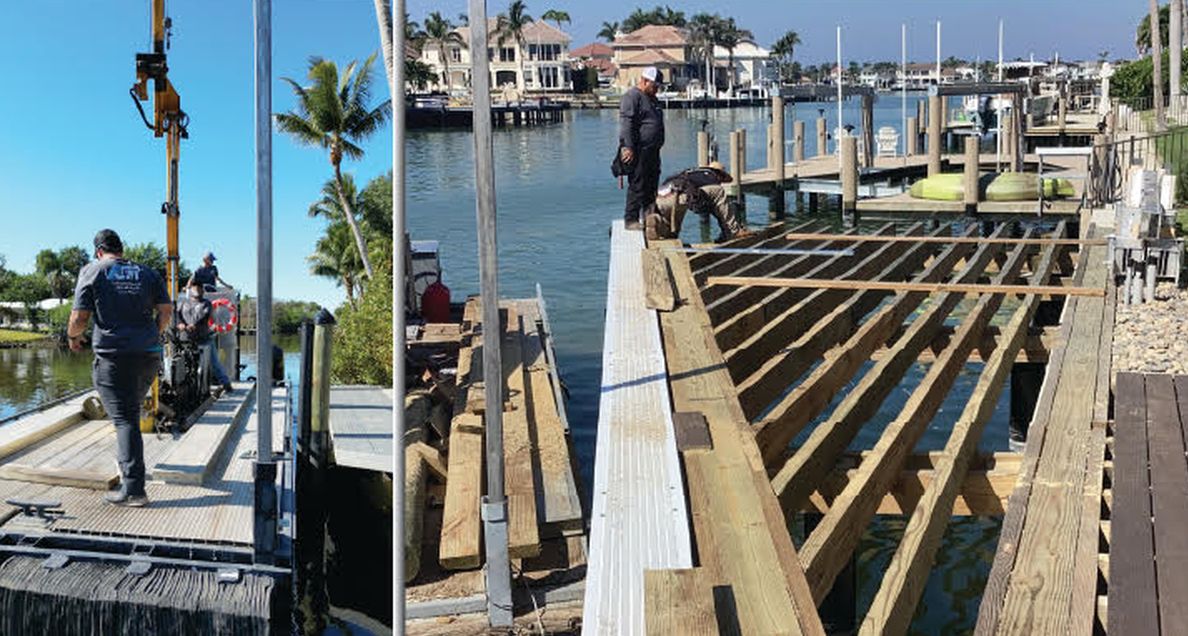
Permitting for dock work in Naples, FL involves multiple agencies depending on what the project touches. The South Florida Water Management District, the Army Corps of Engineers, and Collier County each have their own review criteria. A straightforward single-family dock on a private lot with no submerged resource concerns can still take weeks to clear. A project that triggers environmental review, involves a shared shoreline, or sits within a protected area takes considerably longer.
HOA restrictions add a separate layer. Communities around Longshore Lake often have covenants that govern dock dimensions, materials, and even the color of hardware. Those rules don’t disappear because a county permit was issued. Getting county approval and then discovering the HOA requires a different decking material or a shorter structure means redesigning work that was already priced and scheduled. The smarter approach is to pull the HOA documents before the design is finalized. If your property is managed through a community association, the process of project planning for HOAs and condo boards is worth understanding early.
Submitting a complete, accurate permit package the first time is not a small thing. Missing documentation or an incorrectly drawn site plan can add months to a project. Experienced contractors know what each reviewing agency wants to see and how to present it. That knowledge has real value. A thorough approach to permit preparation and submission is one of the clearest ways a contractor earns their fee before the first pile is ever driven.
Material Choices That Look Simple Until They Aren’t
Pressure-treated wood, composite decking, and aluminum framing each have legitimate use cases, and each comes with trade-offs that depend on how the dock will be used. Pressure-treated lumber costs less upfront and is familiar to most crews, but it requires more maintenance over time and has a shorter service life in a freshwater environment with heavy use. Composite decking holds up better against UV exposure and moisture cycling, but it costs more per board foot and adds weight that has to be accounted for in the substructure. Aluminum floating systems solve certain problems elegantly but are not the right answer for every shoreline configuration.
J&M Marine Construction’s position is that material selection should follow the site conditions and the owner’s realistic maintenance commitment, not the other way around. A customer who wants the lowest possible maintenance burden should hear that honestly, even if it means recommending a more expensive material upfront. A customer with a modest budget and a willingness to do periodic upkeep may be well served by a well-built wood structure. Neither answer fits every situation, and contractors who push one material regardless of context are not serving the customer’s actual interests.
Neighboring communities like Miromar Lakes and Esplanade Lakes see similar decision points, and the calculus is usually the same: the right material is the one that fits the use, the site, and the owner’s long-term plan.
When the Scope Grows After Work Begins
Hidden conditions are a real part of this work. A crew that opens up a section of lakebed to set piles may find buried debris, old concrete, or unexpected rock. A shoreline that looked stable at the waterline may reveal erosion problems once excavation begins. These discoveries are not the result of poor planning; they are the nature of working in and around water where visibility is limited and conditions change.
What separates a well-run project from a frustrating one is how the contractor handles those moments. Clear communication, a written change order before additional work proceeds, and an honest explanation of why the scope changed are the baseline expectation. Customers who understand this going in are better positioned to make good decisions when it happens. Asking a contractor directly how they handle unexpected conditions is a reasonable and useful question before signing anything.
J&M Marine Construction serves property owners in Naples, FL and the surrounding area, including Longshore Lake, and is available to assess your site and walk through what your specific project actually involves. You can reach the team at 2496 Kirkwood Ave, Naples, FL 34112, or by phone at (239) 353-7326.
Frequently Asked Questions
What factors can complicate the construction process for my dock?
Bottom conditions, such as soft muck or buried debris, can create unexpected challenges. Additionally, permitting requirements from multiple agencies and HOA restrictions can delay the project and require redesigns if not addressed early.
How can I prepare for potential complications during the construction of my dock?
It’s important to have a clear understanding of your property’s shoreline conditions and any HOA regulations that apply. Discussing the potential for hidden issues with your contractor and ensuring they provide clear communication about any changes can help you manage expectations.
What materials should I consider for my dock, and how do they impact costs?
Pressure-treated wood is less expensive upfront but requires more maintenance, while composite materials can handle UV exposure better but come at a higher cost. Aluminum systems have specific uses but may not suit every shoreline, so it’s crucial to consider the long-term maintenance commitment and site conditions when selecting materials.
What should I know about the permitting process for my dock project?
The permitting process can involve multiple agencies, such as the South Florida Water Management District and the Army Corps of Engineers, which can take several weeks, especially for projects with environmental concerns. Submitting a complete and accurate permit package the first time is essential to avoid delays, so working with an experienced contractor can be beneficial.
Get Directions to J&M Marine Construction
🎧 Listen to this as a podcast
Also on Apple Podcasts, Spotify, and Amazon Music.