
Private Dock Building for One of Naples' Established Lake Communities
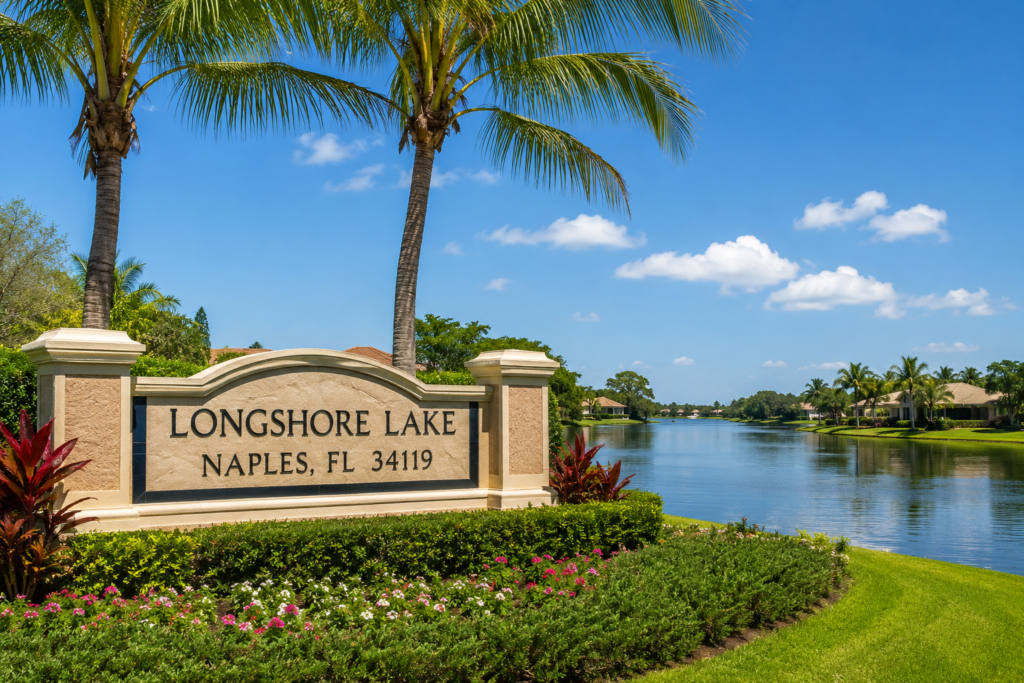
Longshore Lake sits just east of I-75 off Immokalee Road in North Naples, a gated community of around 565 homes built around an 88-acre freshwater lake and the waterways that feed it. Boats here are electric. Kayaks, canoes, and paddleboards share the water.
The community went up in the 1990s, which means most of the docks did too. Thirty years is a long time for a structure that stands in water, and the ones here are reaching the point where owners have to decide what to do about them.
That decision is less simple than it looks. A 1990s dock was built from materials and hardware that were standard then and in some cases aren't available now. Repairing one properly means understanding what it was made from, not just what's failing.
J&M Marine Construction is based in Naples and repairs, rebuilds, and maintains docks throughout Longshore Lake. This page explains what changed since yours went in, and what that means when it comes time to fix it.
The Water Here
Longshore Lake is electric-only. No gas engines, on the lake or in the channels. Electric boats, kayaks, canoes, and paddleboards are what you'll see, and fishing is catch and release.
The 88-acre lake is among the largest private residential lakes in Naples, but the lake is only part of it. Interconnected waterways wind through the community, so a good share of homes sit on a channel rather than open water. You travel the channels to reach the lake.
That geography shapes docks more than the rules do. On open lake frontage you have room to work with, but on a channel you have less width, less depth in places, and a neighbour's dock across from you. Where a structure sits, how far it projects, and which way a boat has to turn become real constraints rather than preferences. It also keeps things modest, since an electric boat is light and nothing here needs a lift built for three tons of powerboat.
Then and Now
Dock building in 1996 and dock building in 2026 aren't the same trade. Here's what moved.
1990s
Today
Treated lumber
CCA-treated pine, standard for decades
Copper-based treatments (ACQ, MCA). More copper, and harder on steel
Fasteners
Standard hot-dip galvanized, fine against CCA
Heavier galvanizing or stainless, because modern lumber demands it
Decking
Wood, resealed every few seasons
Composite widely used. No sealing, holds colour, costs more up front
Framing hardware
Basic galvanized brackets and hangers
Coated or stainless connectors rated for treated lumber
Boat lifts
Simpler drives, fewer controls, heavier maintenance
Better sealing, better switches, remote options
Lighting
Line-voltage fixtures, few of them
Low-voltage LED, sealed, far less to go wrong near water
Piling caps
Often left open
Capped as standard, since open end grain takes water
None of this means a 1990s dock is a bad dock. Plenty were built better than things going in today. But the parts don't interchange the way people assume, and that's where repairs go wrong.
The lumber row is the one that matters most. CCA treatment was phased out of residential use in the early 2000s and replaced with copper-based products. Those are more corrosive to steel than CCA was. Fasteners that were correctly specified for your dock in 1996 are not correctly specified for the board you'd bolt beside them today.
Why Patching Goes Wrong
Here's the situation a lot of Longshore Lake owners walk into.
A few deck boards have gone soft. You get a quote to replace them. Someone comes out, pulls the bad boards, screws down new treated lumber, and it looks great. The price was reasonable. Everything seems fine.
Two years later the fasteners around the new boards are bleeding rust, and the joists underneath them are worse than the ones you didn't touch.
What happened is a materials mismatch. The new lumber is treated with a copper-based product that's harder on steel than the CCA your dock was built with. Bolted against thirty-year-old galvanized hardware that's already given up most of its coating, it accelerates corrosion in exactly the spot you just paid to fix. The repair became the problem.
This is avoidable, and it isn't complicated. Modern treated lumber needs fasteners and connectors rated for it. Where new wood meets old hardware, the old hardware gets replaced too, or the two get isolated. Sometimes the right answer is a barrier between them. It costs a little more than screwing boards down and it's the difference between a repair that lasts and one that quietly does damage.
It's also why the cheapest quote on a 1990s dock deserves a second look. Not because the person quoting is dishonest, but because the job is being priced as board replacement when it's actually a materials-compatibility problem. Ask whoever's quoting what fasteners they're using and why. A good answer is a good sign.
What That Means for Yours
Three broad situations. Most Longshore Lake docks fall into one.
Mostly sound, a few problems. Some soft boards, a bit of rust, a lift that's noisier than it was. Repair is the right answer. Just make sure it's done with materials that suit what's already there, and that the hardware around any new lumber gets dealt with rather than reused.
Several things going at once. Pilings moving, framing sagging, decking flexing across whole sections, lift past its life. At this point the repairs start compounding, and each one meets the same mismatch problem. This is where a rebuild often costs less over ten years than three rounds of patching. Not always. But it's worth pricing both.
Sound structure, tired everything else. Common on well-built 1990s docks. The frame is fine, the surface isn't. Re-decking onto sound framing is a good outcome, and it's the case where switching to composite makes the most sense, since you're doing the work once and never sealing again.
If you're not sure which describes yours, that's what a dock inspection is for. We'd rather tell you it's fine than sell you something.
Not Every Home Has a Dock
Dock rights at Longshore Lake vary by property. Some homes have a private dock, some have frontage without one, and some sit on the water with no dock rights at all.
If you're buying, confirm it during your due diligence rather than assuming from a listing photo or a lake view. Dock rights, permitted size, and where a structure may project into a channel are all things to check with the association before you close, not after.
If you're already here and thinking about adding one, the same questions apply in the same order. What's permitted on your frontage, then what fits the channel, then what you want. We're glad to look at your frontage and tell you what's realistic before you take anything to the association.
Buying a home with a dock already on it? On a thirty-year-old structure, a structural inspection before closing is worth the money. What looks tidy from the lanai and what's happening at the pilings are different questions.
What We Do at Longshore Lake
Dock repairs and rebuilds — decking, framing, piling resets and replacement, hardware. Specified for what your dock is actually made of. Plus routine maintenance and minor repairs.
Inspections — before you buy, or when you want to know what you're sitting on.
Re-decking and composite — the usual answer for a sound frame with a tired surface. See also custom docks and decks and platforms.
New docks — when a rebuild makes more sense than another round of repairs, or where a dock never existed.
Lift service — lighter duty here than on a powerboat lake, but a 1990s lift still needs cables, switches, and drives. New lifts sized for an electric boat rather than something four times the weight.
Accessories — ladders, cleats, bumpers, and low-voltage lighting, which is a straightforward upgrade over 1990s line-voltage fixtures.
Why Longshore Lake Calls J&M
* We ask what your dock is made of. Thirty-year-old structures need repairs specified for the original materials, not just new boards screwed down.
* We're in Naples. Close enough that a site visit isn't a scheduling exercise.
* We build for the channel you're on. Width, depth, and your neighbour's dock across the way all affect what fits.
* We'll tell you when to repair and when not to. Sometimes the honest answer is that your dock is fine.
* Everything in-house. Design, welding, fabrication, and installation. No subcontractors.
* Licensed and insured. Florida license. Certificates of insurance available on request.
We've been building and repairing docks across Southwest Florida
Questions
Can I have a gas boat at Longshore Lake?
No. The community is electric-only, on the lake and in the channels. Electric boats, kayaks, canoes, and paddleboards are what's permitted, and fishing is catch and release.
Does every home here have a dock?
No. Dock rights vary by property, and some waterfront homes don't have them. Confirm with the association during due diligence rather than assuming from a listing or a lake view.
My dock is from the 1990s. Does it need replacing?
Not necessarily. Plenty of 1990s docks have sound framing and only need re-decking. What matters is whether the structure is still doing its job. An inspection will tell you, and it's cheaper than guessing in either direction.
Why do I need different fasteners than the original ones?
Because treated lumber changed. The CCA treatment used through the 1990s was replaced with copper-based products that are harder on steel. New lumber bolted to old galvanized hardware corrodes faster than either would alone, so the fasteners have to suit the wood going in.
Can you build a dock on a narrow channel?
Usually, but the design matters more than on open water. Width, depth, projection limits, and the dock opposite all shape what fits. We measure the frontage before drawing anything.
Ask Us What You're Sitting On
Not sure whether your dock needs repairing, re-decking, or replacing? We'll come and look, tell you which, and explain why.
Call (239) 353-7326 or get in touch here.