Standard, custom, and composite built for Florida waterfronts.
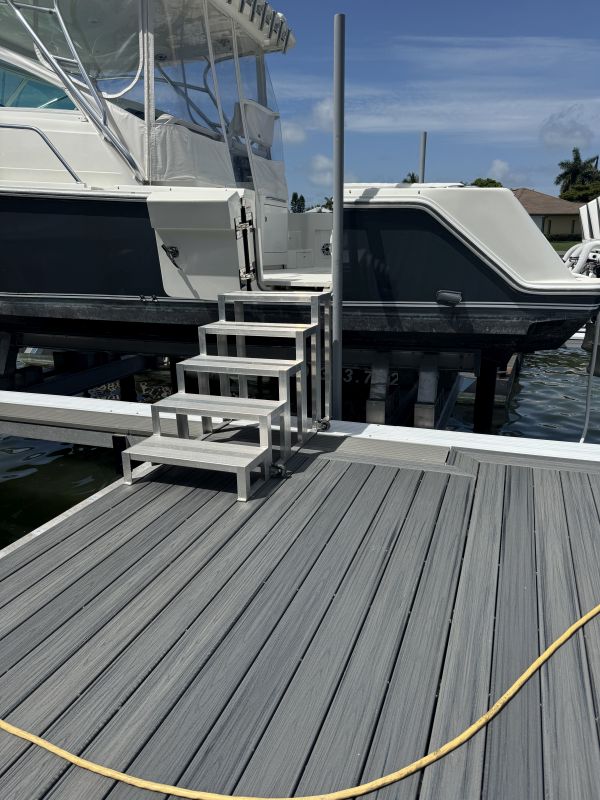
The anchoring system is the most important part of any floating dock. It keeps the dock from drifting at low tide, leaning under load, or tearing loose in a storm. Get it wrong and the dock can end up on the neighbor's lawn after the next hurricane. At J&M Marine Construction, we design and install anchoring on every floating dock we build for Naples waterfront owners.
We are a licensed dock builder, in-house metal fabricator, and full pile-driving crew based at 2496 Kirkwood Ave in Naples. The same team installs pile-guided floats, chain-and-block systems, stiff-arm anchors, and helical anchors across Naples and Collier County.
Naples sits in the active Gulf hurricane zone, so anchoring math matters every single year. Call J&M Marine Construction today to book an anchoring consultation.
Naples sees daily tidal swings of roughly two to three feet, and during storm surge events, water levels can rise far higher — you can check live conditions through NOAA's Tides and Currents data for Naples Bay, which is why we engineer every anchoring system with enough rise-and-fall range to handle the full tidal cycle and worst-case surge.
01
There is no one-size-fits-all anchor system for a Naples floating dock. The right setup depends on what is under your water and how that water moves through the year. We look at each site before we pick a system.
What we check during the site visit:
* Bottom type — sand, muck, rock, or sea grass
* Tide range from high to low
* Wind and wave exposure from open bay or canal
* Dock size, deck load, and side-loads from boats
* Distance from shoreline and neighboring docks
Four core anchoring options cover most Naples docks:
* Pile-guided floats
* Chain-and-block
* Stiff-arm
* Helical anchors
Each option holds best for a specific water condition. A pile-guided system works great in a canal but is overkill on a small platform. A chain-and-block setup works for deep water but cannot hold a dock at a fixed tide level.
Naples canal lots and open-bay lots call for different systems even when the docks look the same on paper. We match the anchor type to the actual conditions on your shoreline, not a generic template.
02
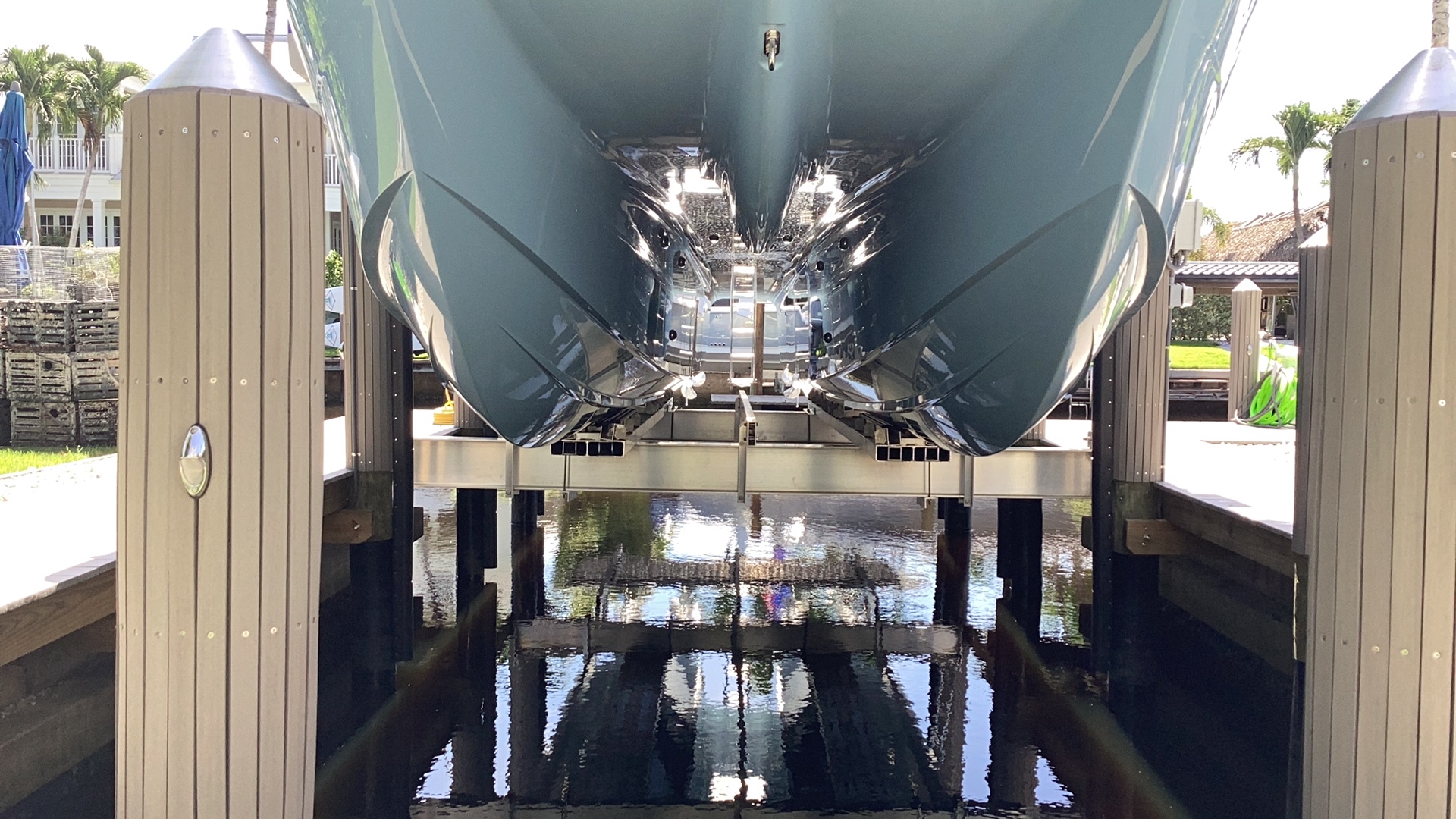
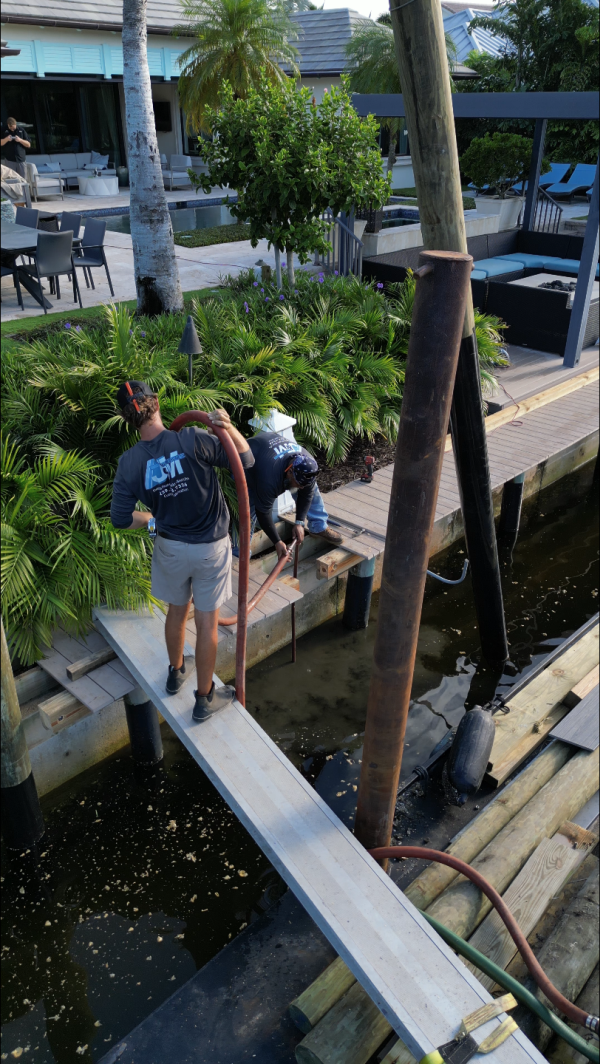
Pile-guided anchoring is the most popular system for canal-front floating docks in Naples. The dock slides up and down on driven pilings as the tide moves, so it stays in the same horizontal spot all day long.
How the system works:
* Pilings get driven through the dock at fixed points
* Float guides on the dock wrap around each piling
* The dock rides the tide up and down without drifting
* Wind chop pushes the dock against the pilings, not away from them
Why owners pick pile-guided:
* Holds the dock in exact position
* Performs well through tide swing and daily chop
* Predictable, low-maintenance hold
Most Old Naples and Royal Harbor canal docks use pile-guided anchoring. The tidal swing in those canals is steady and predictable, which is exactly what this system handles best.
Our pile-driving crew sets each piling to the right depth and plumb angle. We then mount the float guides to the dock frame so the slide stays smooth for years. One visit, one crew, one finished anchoring system ready for daily use.
03
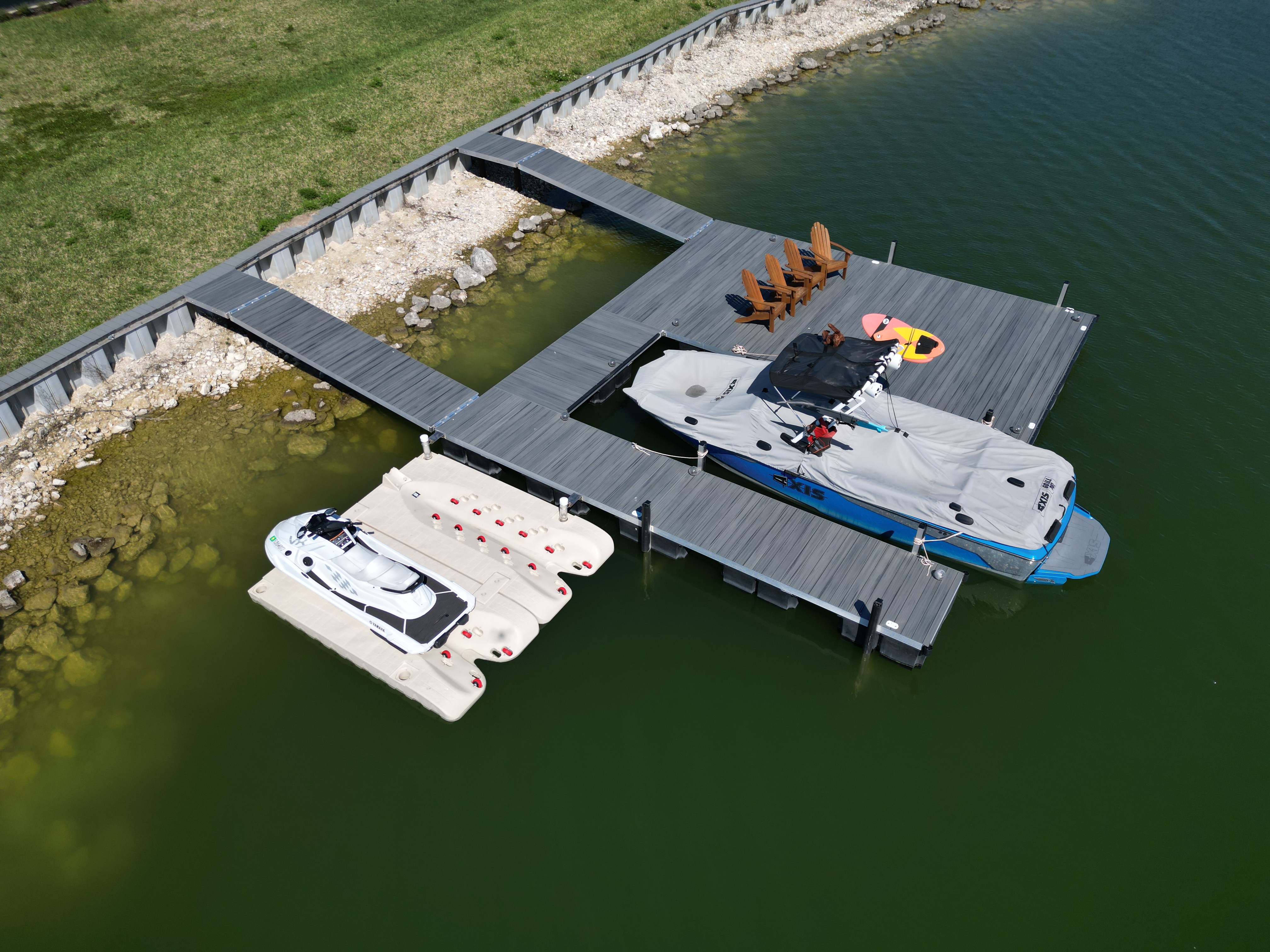
Chain-and-block anchoring is the go-to system for floating docks in deeper water or open-bay locations. The dock connects to heavy concrete or steel blocks resting on the bottom, and the chains let the dock ride the surface as it moves.
How the system works:
* Blocks set on the bottom under the dock
* Chains run from each corner of the dock to a block
* Chain length scaled to water depth and tide range
* Dock rides up and down within the chain's swing radius
Why owners pick chain-and-block:
* No pilings needed, which keeps the bottom clean
* Scales well to large docks and marina-style builds
* Works in water too deep for practical pile driving
Aqualane Shores and open Naples Bay docks often use chain anchoring because the water is too deep or the bottom is wrong for pilings. Big platforms with multiple slips do well on this system too.
The hold depends on three things: block weight, chain length, and lay angle. Too little weight or too short a chain and the dock drifts. Too long a chain and the dock swings into the seawall at low tide. We size all three to your dock load and your water depth.
04
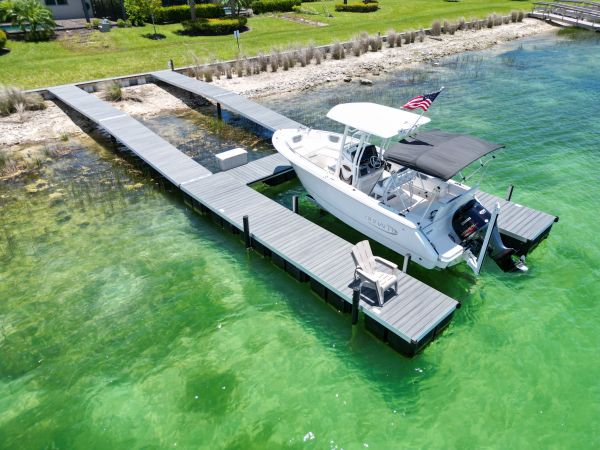
Stiff-arm anchoring is the simplest hold on the menu. Rigid steel arms connect the dock to the shoreline or seawall, and the dock floats up and down on the arm's pivot point. No pilings, no chains, no blocks on the bottom.
How the system works:
* Steel arms bolt to the dock on one end
* Other end mounts to the seawall, shoreline, or a ground anchor
* Hinge or pivot points let the dock rise and fall with the tide
* Side-load gets carried through the arms back to shore
Best uses for stiff-arm anchoring:
* Small docks and walkways
* Swim platforms and kayak launches
* Short canal docks with low side-load
* Shoreline platforms with no boat side-loads
Naples canal lots with limited water and small docks often use this system. It costs less, installs faster, and keeps the bottom clear of pilings or blocks.
The limit is size. Stiff-arm anchoring works best for shorter docks with low side-load from boats. Large docks or docks with heavy boat traffic put too much stress on the arms over time. We help you decide if stiff-arm is the right call based on dock size and how you plan to use it.
Helical anchors are the strongest hold for soft bottoms and high-storm exposure. The anchor is a steel shaft with a wide helix plate on the end. It screws down into the bottom like a giant lag bolt, gripping deep undisturbed soil.
How the system works:
* Helical shaft drives into the bottom with a hydraulic motor
* The helix plate grips dense soil below soft surface muck
* Chain or rigid arm connects the dock to the anchor head
* Hold strength gets verified by torque reading during install
Why owners pick helical anchors:
* Very strong hold in soft muck and silt
* Works where pilings can shift or tilt over time
* Less visible from the water than pilings or blocks
* Holds well under high-wind storm load
Naples sits in the Gulf hurricane zone, so anchor strength matters every single year. Helical anchors are a smart upgrade for docks on soft bottoms or exposed shorelines. We often pair them with chains or rigid arms to connect the dock.
The torque reading during install tells us exactly how much load the anchor can hold. That gives you a verified number instead of a guess. We share the torque numbers as part of your project paperwork so you know what your anchoring system can take.
An anchoring system is the part of the dock you cannot see, which makes it the part most owners forget about. A failed anchor takes the rest of the dock with it. We inspect and repair anchoring on docks across Naples, whether we built them or not.
What our annual anchoring inspection covers:
* Chain links and shackles for wear and corrosion
* Pile guides for cracks or loose hardware
* Concrete and steel anchor blocks for shifting
* Helical anchor shafts for tilt or pull-up
* Stiff-arm pivots and bolts for play
* Connection points where chain or arm meets dock
Storm prep work before hurricane season:
* Tighten every shackle and bolt
* Replace worn or rusted chain links
* Reset blocks that have shifted on the bottom
* Add extra anchoring on exposed docks
Naples hurricane season runs June through November, and every anchor system gets tested during those months. After a named storm, we run damage assessments and replace any failed parts before the next swell. We add anchoring to our regular service plans so it stays current with the rest of the dock. One yearly visit protects the whole structure.
The best anchoring system for a floating dock in Naples depends on bottom type, tide range, and storm exposure. No single system wins every lot — site conditions decide which option holds best. We check all three factors during the on-site visit before we pick a system.
The three most-used systems in Naples:
* Pile-guided anchoring for canal lots with steady tidal swing
* Chain-and-block anchoring for open-bay and deep-water docks
* Helical anchors for soft bottoms and high-wind storm exposure
A site visit gives you a clear recommendation based on your water, your bottom, and how you use the dock.
Whether you are building a new floating dock or upgrading the anchoring on an existing one, our crew is ready to help. We serve waterfront owners across Naples, Marco Island, and all of Collier County.
What you get when you call J&M Marine Construction:
* Free on-site shoreline visit
* Pile-guided, chain, stiff-arm, and helical anchoring options
* In-house pile-driving crew
* Storm prep and post-storm response
* One team from design through install
Call (239) 353-7326 to schedule your anchoring consultation. You can also stop by our shop at 2496 Kirkwood Ave, Naples, FL 34112 to talk through your project in person.